
Exploring the Best Scenic Cycling Paths and Hidden Landscapes on Hilton Head Island
Hilton Head Island is often experienced at sea level. The rhythm of waves, the ease of beachfront bike paths, the comfort of knowing exactly where the day will lead. It’s a version of the island that works beautifully, especially for first-time visitors. But there is another Hilton Head waiting just beyond the shoreline routes, one that reveals itself only when you turn inland, slow your pace, and ride without an agenda.
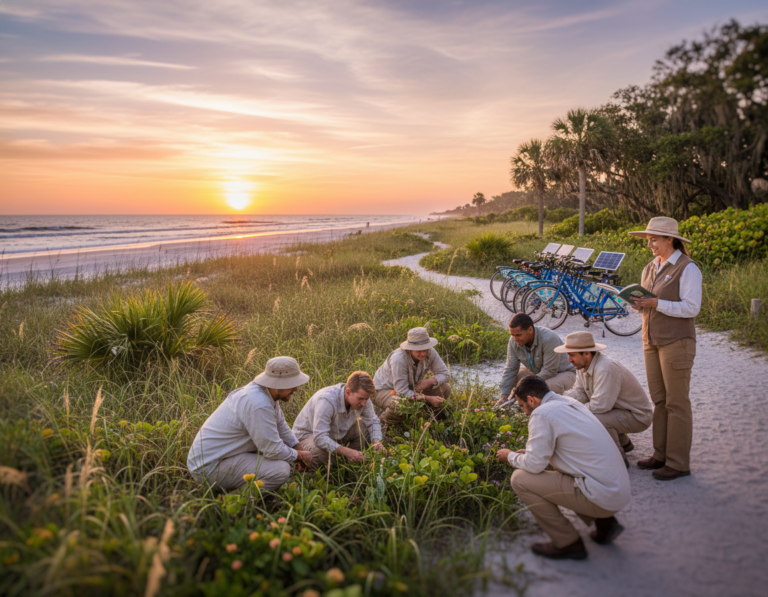
Cycling beyond the beaches isn’t about chasing distance or elevation. Hilton Head doesn’t demand that kind of effort. Instead, it offers something quieter and more reflective. Inland paths move through maritime forest, along marsh edges, and into preserved spaces where the island’s natural and human histories overlap. These routes tell stories not through signage or spectacle, but through proximity. You feel them as you ride.
Why Hilton Head Is Built for Exploratory Cycling
Hilton Head’s reputation as a bike-friendly island is well earned. Its flat terrain, extensive trail network, and commitment to multi-use paths make cycling accessible for nearly every skill level. What’s less talked about is how intentionally those paths were designed to protect and connect green space rather than replace it.
While the main corridors along William Hilton Parkway and the beachfront loops serve their purpose, the quieter inland routes offer a different reward. These paths favor shade over sun, birdsong over traffic noise, and moments of stillness over constant motion. They invite curiosity rather than efficiency, making them ideal for riders who want to explore the island rather than simply move through it.
Riding Into the Island’s Natural Core
Some of Hilton Head’s most meaningful rides pass through landscapes that look much as they did long before development reshaped the coast. The Sea Pines Forest Preserve is one of the clearest examples. Cycling here feels like entering a pause in time. Packed dirt paths and boardwalks wind through wetlands, open meadows, and dense stands of live oak draped in Spanish moss.
The preserve holds documented Native American shell ring sites, subtle reminders that this land has been inhabited and shaped for thousands of years. Riding slowly through these areas, you begin to understand that Hilton Head’s story did not start with resorts or vacation homes. It started with people who understood how to live in rhythm with water, soil, and seasons.
Pinckney Island National Wildlife Refuge offers a similar sense of separation. Just across the Mackay Creek Causeway, the refuge feels detached from the pace of the island proper. Its wide dirt roads are open to cyclists, and rides here unfold through salt marsh, open fields, and maritime forest. Wildlife sightings vary by season and luck, but the experience is consistent in one way. It encourages patience. The refuge doesn’t reward speed. It rewards attention.
Cycling Through Places That Carry Memory
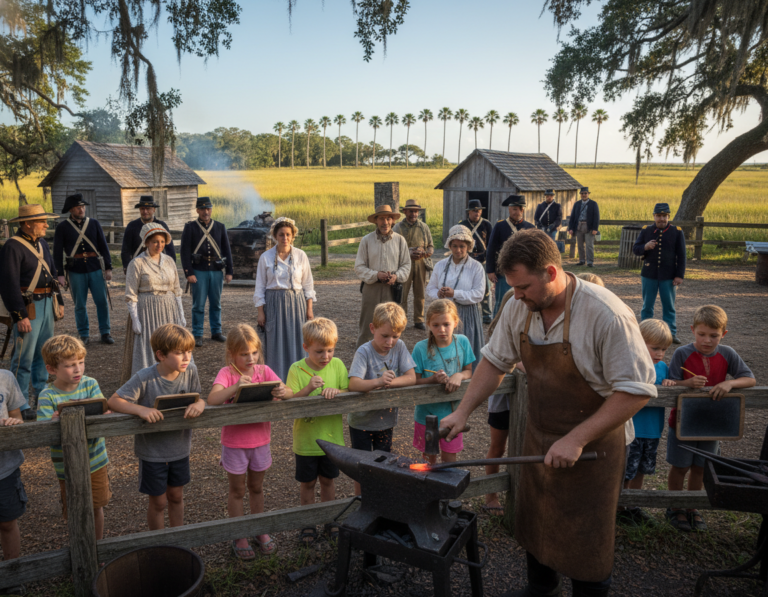
Not all meaningful rides are defined by scenery alone. Some are shaped by what happened there. Mitchelville Freedom Park is one of those places. Built on the site of the first self-governed community of formerly enslaved people in the United States, Mitchelville carries historical weight that is best approached slowly.
Cycling into the park along its gentle paths feels appropriate. There is no rush here, no sense of needing to cover ground. The boardwalks, interpretive spaces, and open green areas invite reflection. Approaching Mitchelville by bike creates a quiet transition from the modern island into a place where history still feels present.
Jarvis Creek Park, on the north end of Hilton Head, offers a different but equally grounding experience. Its paved path loops along water and marsh, creating a short ride that feels restorative rather than recreational. It’s the kind of place locals slip into for a mental reset, a reminder that even small pockets of preserved land can offer space to breathe.
Audubon Newhall Preserve adds another layer to the inland cycling experience. This protected area preserves a slice of Hilton Head’s original landscape, and where cycling is permitted, riders move through corridors shaped by conservation rather than convenience. The experience here is quieter, more restrained, and intentionally respectful. It reinforces how rare untouched land has become on the island and how valuable it is to move through it carefully.
How Cycling Reveals Hilton Head’s Layered History
One of the most compelling aspects of cycling inland is how effortlessly different eras intersect. A single ride might pass land once tied to plantation agriculture, cross waterways that supported Civil War movement, and skirt communities shaped by Gullah Geechee culture. None of it is labeled as a formal heritage route, and that absence feels intentional.
Hilton Head doesn’t package its history into a single trail or experience. Instead, it allows riders to encounter it in fragments, pieced together through observation and context. This approach mirrors the island’s broader identity. History here is not a single story. It’s a collection of overlapping narratives that only reveal themselves when you move slowly enough to notice.
Timing Your Ride With the Island’s Rhythm
Cycling on Hilton Head is deeply influenced by season, not because the terrain changes dramatically, but because the island’s atmosphere does. Spring brings color and scent. Azaleas bloom, jasmine hangs in the air, and migratory birds return to the marshes. Rides feel alive without being overwhelming.
Summer demands intention. Early morning rides take advantage of cooler air and long shadows cast by forest preserves. Inland paths become especially valuable during warmer months, offering shade and relief from direct sun. Fall is widely considered the island’s best cycling season. The humidity eases, crowds thin, and the days remain warm enough for comfortable riding.
Winter, often overlooked, offers its own reward. Crisp air, quieter paths, and unobstructed views through thinning foliage create conditions ideal for reflective rides. Inland trails during winter often feel like private spaces, especially on weekday mornings.
Practical Considerations for Inland Cycling
Hilton Head’s inland routes are approachable, but preparation still matters. Water is essential, even on short rides, as humidity can linger longer than expected. A basic repair kit provides peace of mind, particularly on dirt paths farther from main roads.
Staying on designated trails is crucial, especially in preserves and refuges where ecosystems are sensitive. Cyclists should expect to share paths with pedestrians and wildlife, yielding generously and riding with awareness rather than urgency.
Local bike shops across the island offer rentals, trail advice, and insight into current conditions. For visitors unfamiliar with the inland network, a brief conversation with a local outfitter can unlock routes that rarely appear on tourist maps.
Riding With Respect for the Land
The quieter cycling routes on Hilton Head exist because of decades of intentional preservation. Cyclists play a role in maintaining that balance. Riding respectfully means staying on marked paths, minimizing noise, and allowing wildlife space to move freely.
These spaces are not designed to be conquered or maximized. They are meant to be experienced lightly. The goal is not to leave a mark, but to leave with an understanding of how fragile and valuable these environments are.
Discovering the Other Hilton Head
Cycling beyond the beaches doesn’t diminish Hilton Head’s oceanfront charm. It deepens it. By exploring the island’s interior, riders gain a fuller picture of a place shaped by more than sand and surf. Forests, marshes, and preserved land tell stories just as compelling, often in quieter ways.
Turning inland changes how Hilton Head feels. The island becomes less of a destination and more of a living landscape, layered with memory and intention. For those willing to pedal past the obvious routes, Hilton Head reveals itself not as a single experience, but as a collection of moments that reward curiosity and patience.
Slow down. Leave the shoreline behind for a while. The island has more to say when you give it the space to speak.