
Learning Marine Biology on Hilton Head Island Through Hands-On Field Studies
Hilton Head Island has always been defined by water. It shapes the land, moderates the climate, and quietly dictates the rhythm of daily life. For many visitors, that relationship stays surface-level, experienced through beach walks and boat rides. But beneath the calm surface of creeks, marshes, and sounds, the island’s waters are constantly teaching. Over the years, local institutions have recognized that education here doesn’t belong solely in classrooms. It belongs in waders, on docks, and knee-deep in pluff mud.
Marine biology field studies on Hilton Head are transforming how students, researchers, and even visitors understand coastal ecosystems. By turning the island’s waterways into living laboratories, these programs make science tangible, immersive, and deeply connected to place. Learning here isn’t abstract. It’s experiential, sensory, and rooted in stewardship.
A Coastline Built for Scientific Discovery
Hilton Head’s location at the intersection of tidal marsh, estuary, and open ocean creates one of the most biologically productive environments on the East Coast. The island’s waters support everything from microscopic plankton to dolphins and sea turtles, all interconnected through complex ecological relationships.
Tidal marshes dominate the landscape, especially along Broad Creek, Skull Creek, and Port Royal Sound. These marshes act as nurseries for fish and shellfish, filters for water quality, and buffers against storm surge. Estuaries blend freshwater and saltwater, creating conditions that demand adaptability from every organism that lives there. This constant exchange makes Hilton Head an ideal setting for marine field studies focused on resilience, adaptation, and environmental change.
Why Field-Based Marine Education Matters Here
Marine biology on Hilton Head cannot be taught effectively from behind a desk. The systems are too dynamic, too seasonal, and too interconnected. Field-based learning allows students to observe real-time interactions between species, tides, and human activity.
By collecting water samples, monitoring oyster reefs, or tracking marine mammals, learners begin to understand how fragile coastal systems truly are. They also see how small changes in salinity, temperature, or pollution can ripple outward, affecting the entire ecosystem. This hands-on exposure fosters critical thinking and a sense of responsibility that traditional instruction often struggles to achieve.
The Coastal Discovery Museum as an Educational Anchor
The Coastal Discovery Museum at Honey Horn plays a central role in Hilton Head’s marine education landscape. Its programs bridge science, history, and conservation, grounding fieldwork in cultural and environmental context. Students and participants don’t just learn what lives in the water. They learn why it matters.
Field research initiatives led by the museum focus on water quality monitoring, marsh health, and species identification. These projects often involve partnerships with local schools, universities, and conservation organizations. By inviting the community into the research process, the museum reinforces the idea that marine science is not reserved for specialists. It’s a shared responsibility.
The museum’s proximity to tidal creeks and marshes allows for immediate application of classroom concepts. A lesson on estuarine systems can quickly turn into a sampling expedition, where theory meets reality within minutes.
Marine Research in the Sea Pines Forest Preserve
The Sea Pines Forest Preserve offers another layer of opportunity for marine biology field studies. While often associated with hiking and wildlife observation, the preserve also supports research focused on freshwater and brackish ecosystems. Its lakes, wetlands, and marsh-adjacent habitats provide a controlled environment for long-term monitoring and data collection.
Educational programs here emphasize observation over intervention. Students learn how to document species presence, measure environmental variables, and analyze changes over time. This slow, methodical approach teaches patience and respect for natural systems, reinforcing the idea that meaningful science often unfolds quietly.
A Day Immersed in Marine Science
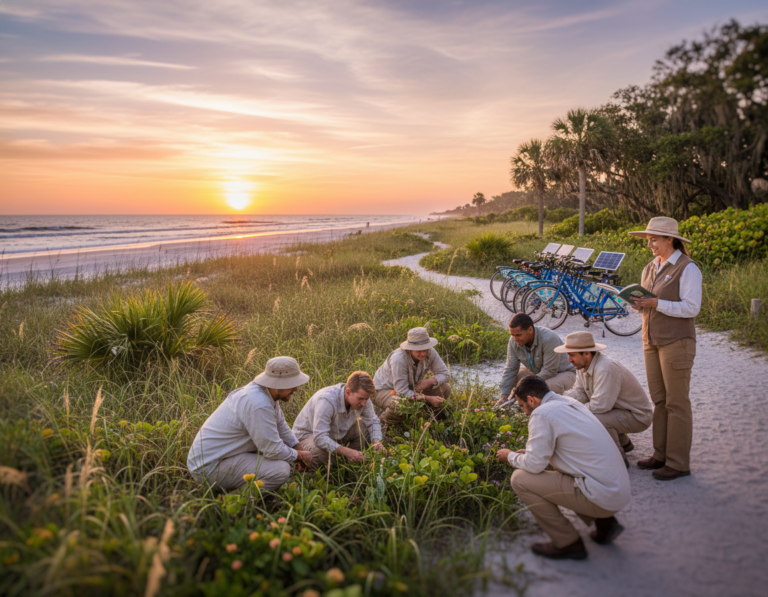
Field studies on Hilton Head follow the rhythms of the tide rather than the clock. Mornings often begin early, timed to low tide when marsh access is easiest. Students wade into creeks, collect sediment samples, and document visible marine life. The work is physical, occasionally messy, and always instructive.
As the day progresses, collected samples move from field to lab. Under microscopes, plankton reveals itself as a diverse and essential foundation of the marine food web. Water quality measurements begin to tell stories about nutrient levels, salinity shifts, and ecosystem health. This transition from outdoor collection to indoor analysis reinforces the connection between observation and interpretation.
Throughout the process, sensory experience plays an important role. The smell of salt and mud, the sound of moving water, and the feel of changing currents anchor learning in memory. Science becomes something felt as much as understood.
Local Experts Guiding the Next Generation
Hilton Head’s marine education programs benefit from educators and researchers who are deeply rooted in the island. Many have spent decades studying these waters, developing an intuitive understanding that complements formal training.
Marine educators affiliated with institutions like the Coastal Discovery Museum often split their time between research and instruction. Their dual roles ensure that educational content remains current and grounded in real-world science. Boat captains and field guides, particularly those who have worked these waters for years, provide practical insight that textbooks cannot replicate.
These local experts emphasize observation, respect, and humility. Students are taught not to dominate the environment but to learn from it, recognizing that coastal systems operate on timelines far longer than a semester or research grant.
Turning Community Members into Citizen Scientists
One of the most impactful aspects of marine biology field studies on Hilton Head is their accessibility. Many programs invite residents and visitors to participate in data collection, monitoring, and conservation projects. This approach turns curiosity into contribution.
Oyster reef restoration efforts near Mitchelville Beach offer a powerful example. Participants help build and maintain reefs that improve water quality and provide habitat for marine life. In doing so, they learn how oysters function as ecosystem engineers and why their decline has far-reaching consequences.
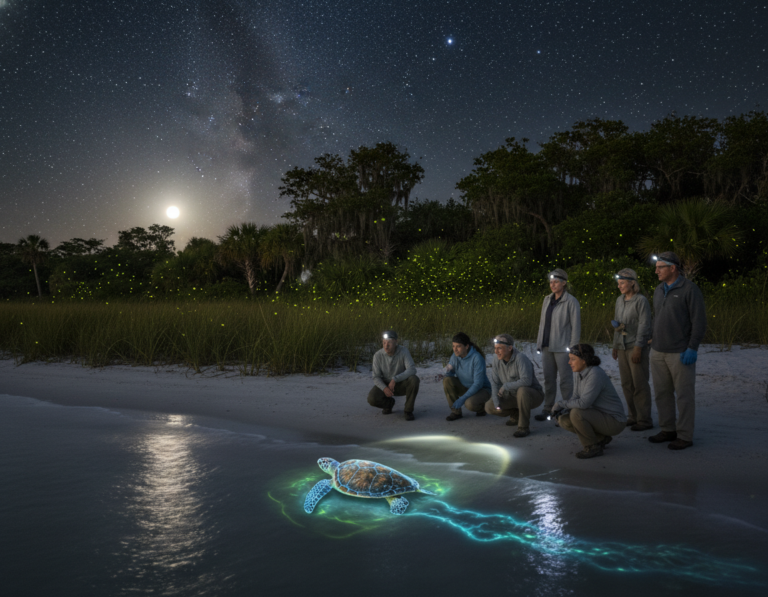
Dolphin monitoring programs, plankton sampling events, and sea turtle nesting surveys further expand public involvement. These experiences demystify marine science, showing that meaningful data collection can happen outside traditional academic settings.
Education as Conservation in Action
Marine education on Hilton Head does more than teach biology. It actively supports conservation. Data collected through field studies informs local management decisions, helping guide efforts to protect waterways, manage development, and respond to environmental threats.
Programs focused on climate resilience examine how rising temperatures, sea level changes, and human activity affect coastal ecosystems. Students and participants gain firsthand exposure to the challenges facing marine environments, reinforcing the urgency of sustainable practices.
This connection between education and action ensures that learning does not end when a program concludes. Participants leave with knowledge that shapes how they interact with the island long after their fieldwork ends.
Shaping the Island’s Future Through Science
As Hilton Head continues to grow and change, marine biology field studies play an increasingly important role in shaping its future. By educating residents, training students, and engaging visitors, these programs cultivate a community that understands the value of its natural resources.
The ripple effect is visible. Students pursue careers in marine science and environmental policy. Residents advocate for responsible development. Visitors leave with a deeper appreciation for the waters that define the island. Education becomes a long-term investment in ecological and cultural sustainability.
A Living Classroom With Lasting Impact
Hilton Head’s waters are more than scenic backdrops. They are classrooms without walls, laboratories without ceilings, and teachers that demand attention and care. Marine biology field studies on the island honor that reality by meeting the environment on its own terms.
By embracing hands-on learning and local expertise, Hilton Head has created a model where education, conservation, and community intersect. The result is not just better science, but a deeper relationship between people and the place they inhabit.
And that, perhaps, is the most important lesson the island has to offer.