
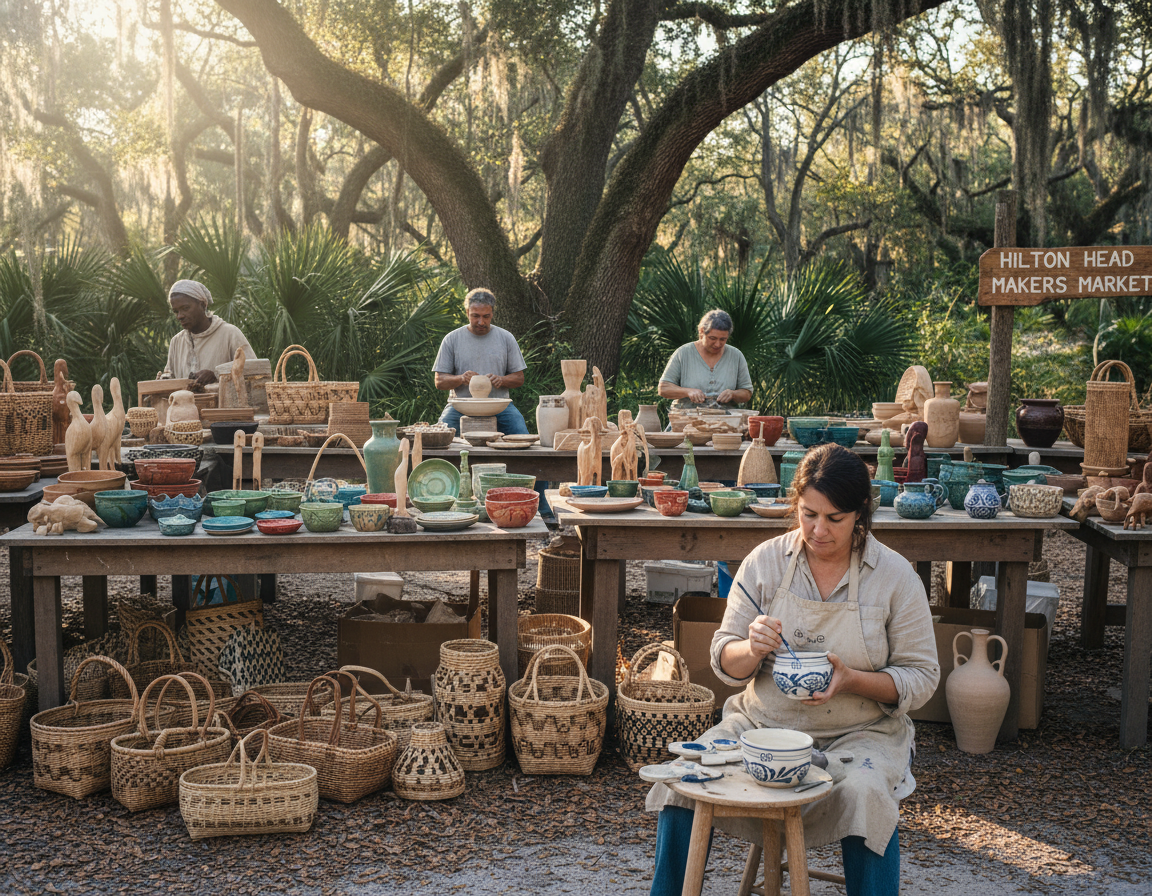
Inside Hilton Head’s Artisan Craft Revival and Lowcountry Traditions
Hilton Head Island has always carried a quiet kind of creativity. It doesn’t announce itself with flashing signs or mass-produced souvenirs. Instead, it reveals its artistry slowly, through handmade objects, inherited techniques, and stories passed from one generation to the next. The island’s growing makers movement isn’t a trend driven by novelty. It’s a revival rooted in memory, culture, and what it means to create something with intention.
Today, Hilton Head’s artisan craft scene reflects a deeper desire to preserve Lowcountry traditions while allowing them to evolve. From sweetgrass baskets woven by hand to pottery shaped by coastal clay, local makers are redefining what it means to honor the past while working firmly in the present.
A Craft Tradition Shaped by the Lowcountry
The Lowcountry’s geography has always influenced how people create. Surrounded by marsh, sea grass, live oaks, and tidal creeks, Hilton Head’s artisans draw inspiration directly from the land. Long before galleries and studios appeared, functional crafts were part of daily survival. Baskets, tools, textiles, and vessels were made not for decoration, but for life.
That legacy continues today. Modern artisans still rely on materials sourced from the surrounding environment, whether it’s palmetto fronds, reclaimed wood, clay, or shells shaped by the tides. These elements don’t just inform the look of the work. They embed place into every finished piece, making Hilton Head’s artisan products unmistakably local.
Gullah Geechee Influence and Cultural Continuity
Any discussion of Hilton Head’s craft revival must acknowledge the profound influence of Gullah Geechee culture. Descendants of enslaved Africans preserved traditions that survived centuries of isolation along the Southeast coast. Language, foodways, music, and craftsmanship all remain integral to the island’s identity.
Sweetgrass basket weaving is one of the most visible examples of this continuity. Originally created for agricultural use, these baskets are now recognized as both functional art and cultural artifacts. Artisans like those connected to the Coastal Discovery Museum continue to teach and demonstrate this craft, ensuring it remains a living tradition rather than a museum relic.
These practices are not replicated for performance. They are taught, adapted, and respected within the community, reinforcing the idea that cultural preservation requires participation, not observation.
Where Tradition Meets Contemporary Expression
Hilton Head’s artisan revival does not exist solely in the past. Many local makers are reinterpreting traditional techniques through a contemporary lens, creating work that appeals to modern sensibilities while remaining rooted in heritage.
Potters across the island are embracing centuries-old firing methods while experimenting with modern forms and glazes inspired by coastal tones. Woodworkers transform fallen trees and reclaimed lumber into furniture and sculptural pieces that reflect both sustainability and craftsmanship. Jewelry makers incorporate shells, sea glass, and metals into designs that echo the rhythms of the shoreline.
This balance between honoring tradition and embracing innovation has allowed Hilton Head’s artisan community to grow organically, attracting both long-time residents and new creatives drawn to the island’s slower pace and strong sense of place.
The Art League of Hilton Head and Creative Infrastructure
One of the anchors of the island’s artisan ecosystem is the Art League of Hilton Head. Located at Shelter Cove Harbour, the organization provides exhibition space, education, and professional support for local artists. Its galleries showcase a rotating collection of work that spans painting, sculpture, fiber art, and mixed media, offering visitors a comprehensive view of the island’s creative landscape.
Beyond exhibitions, the Art League plays a vital role in education. Workshops and classes allow both residents and visitors to engage directly with artistic processes, turning appreciation into participation. This hands-on approach strengthens the connection between the community and its makers, reinforcing the value of craftsmanship in everyday life.
Markets That Bring Makers and Community Together
Hilton Head’s artisan revival thrives in spaces where creators and collectors meet face-to-face. The Farmers & Makers Market at Honey Horn exemplifies this connection. Held on the grounds of the Coastal Discovery Museum, the market brings together artisans, farmers, and producers in a setting that feels both communal and intentional.
Walking through the market, visitors encounter handmade pottery, textiles, woodwork, and jewelry alongside local food and produce. Conversations flow easily between makers and shoppers, allowing stories to travel with the objects being sold. These exchanges transform purchases into relationships, reinforcing the idea that supporting artisans supports culture itself.
Studios, Galleries, and the Island’s Creative Corridors
Beyond markets, Hilton Head’s studios and galleries offer deeper immersion into the island’s craft culture. Nash Gallery in Coligny Plaza highlights regional artists whose work reflects Lowcountry landscapes and themes. Shelter Cove Harbour has become a hub for creatives, blending marina views with studio spaces and exhibitions that invite lingering rather than hurried browsing.
Smaller, independent studios scattered across the island provide opportunities to see artisans at work. These spaces reveal the labor behind the art, from shaping clay to carving wood, emphasizing that craftsmanship is as much about process as it is about the final product.
Education, Mentorship, and Passing Skills Forward
Sustainability in artisan communities depends on education. Hilton Head has made intentional efforts to ensure traditional skills are passed on rather than lost. Demonstrations and programs hosted by institutions like the Coastal Discovery Museum allow younger generations to learn directly from experienced artisans.
Mentorship plays a crucial role in this process. Many makers speak openly about learning from parents, grandparents, or community elders. This lineage of instruction reinforces respect for technique while allowing room for personal interpretation. In this way, Hilton Head’s craft revival remains dynamic rather than static.
Why Handmade Still Matters on Hilton Head
In an era dominated by mass production, Hilton Head’s embrace of handmade goods reflects a broader cultural shift toward authenticity. Locals and visitors alike are increasingly drawn to objects that carry meaning, labor, and story. Buying handmade on the island becomes an act of participation in preservation rather than simple consumption.
Artisan crafts also strengthen the local economy. By supporting makers, buyers help sustain small businesses, creative careers, and cultural institutions. This economic impact reinforces the value of craftsmanship beyond aesthetics, positioning it as a viable and respected livelihood.
Taking Home More Than a Souvenir
Bringing home a handmade piece from Hilton Head is not about decoration alone. It’s about carrying a fragment of the island’s identity beyond its shores. Whether it’s a woven basket, a ceramic bowl, or a piece of locally inspired jewelry, these objects serve as tangible reminders of place, tradition, and human connection.
Each item reflects a dialogue between past and present, maker and material, land and culture. In that sense, Hilton Head’s artisan craft revival is not simply about art. It’s about continuity.
A Living Tradition Still Taking Shape
Hilton Head’s makers movement continues to evolve, shaped by the same forces that shaped the island itself. Nature, heritage, and community remain at its core. By honoring traditional Lowcountry crafts while encouraging creative growth, the island has cultivated an artisan culture that feels both grounded and forward-looking.
For those willing to look beyond the surface, Hilton Head reveals itself as a place where creativity is not curated for tourists, but lived daily. The island’s craft revival stands as proof that traditions survive not by standing still, but by being practiced, shared, and reimagined with care.