Exploring Ancestry and Cultural Heritage on Hilton Head Island
Some places invite you to relax. Others invite you to remember. Hilton Head Island belongs firmly in the second category. Beneath its modern reputation as a coastal getaway lies a layered history shaped by resilience, cultural preservation, and families who refused to let their stories disappear. For travelers interested in ancestry and heritage, Hilton Head offers something rare: a place where history is not reduced to plaques and timelines, but still lives in the landscape, the community, and the voices willing to share it.
Exploring ancestry on Hilton Head is not about tracing a single bloodline or uncovering one definitive answer. It is about understanding how people lived, adapted, and carried their traditions forward under extraordinary circumstances. Whether you arrive with a family tree in hand or simply a curiosity about the Lowcountry’s past, the island reveals its stories slowly, rewarding those who are willing to look beyond the surface.
Hilton Head’s Place in the Gullah Geechee Cultural Heritage Corridor
Hilton Head Island sits within the federally designated Gullah Geechee Cultural Heritage Corridor, a recognition that underscores the national importance of the region’s history. The Gullah Geechee people, descendants of enslaved Africans brought to the coastal Southeast, developed a distinct culture that survived centuries of isolation, oppression, and change. Their language, customs, foodways, and spiritual traditions remain a defining part of the Lowcountry’s identity.
Unlike many regions where development erased cultural memory, Hilton Head has made conscious efforts to preserve it. This commitment allows visitors to engage with history in ways that feel grounded and authentic rather than curated for convenience. Understanding the Gullah Geechee influence provides essential context for anyone exploring ancestry here, as it shaped everything from land use and community structure to storytelling and family ties.
Mitchelville Freedom Park and the Meaning of Self-Governance
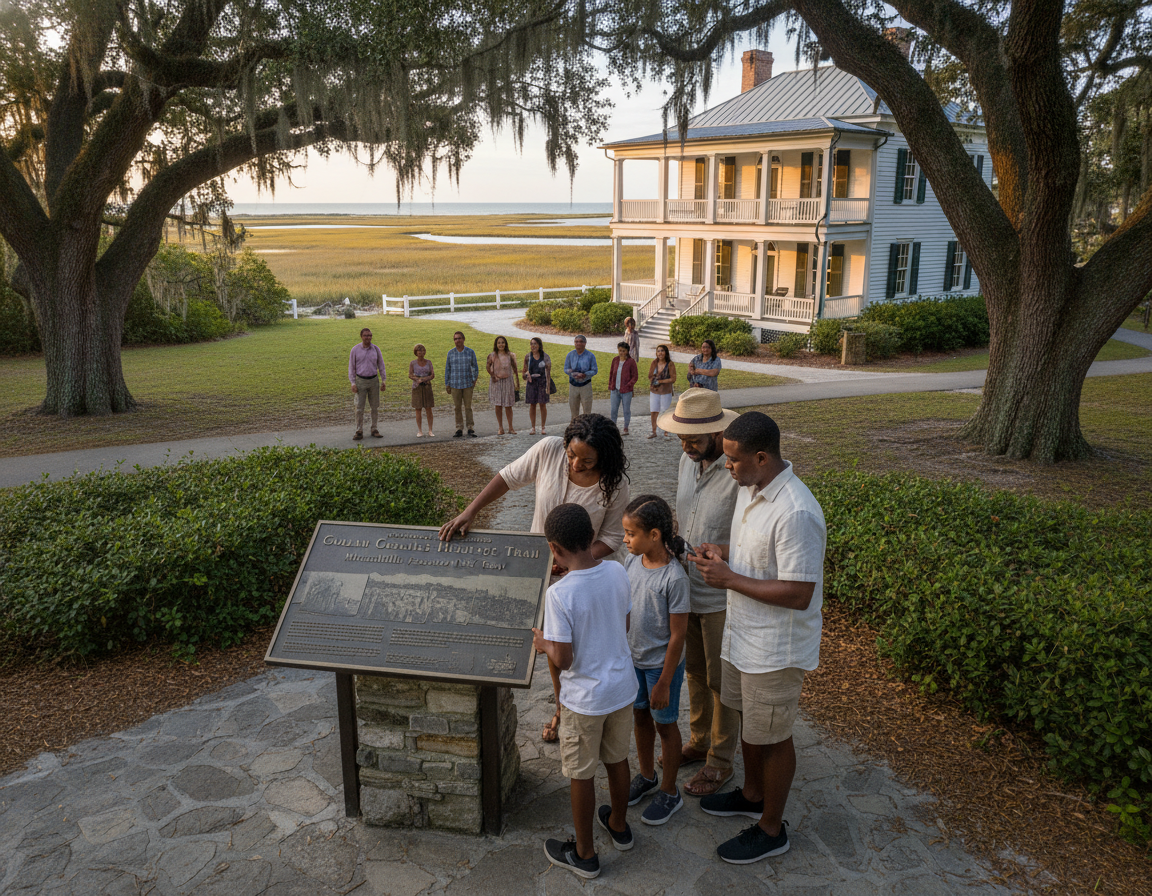
One of the most significant historical sites on Hilton Head Island is Mitchelville Freedom Park. Established in 1862 during the Civil War, Mitchelville was the first self-governed town of formerly enslaved people in the United States. Its residents built homes, created schools, established laws, and governed themselves at a time when freedom was still an uncertain and fragile concept.
Visiting Mitchelville today offers more than a history lesson. The park’s reconstructions, interpretive exhibits, and preserved grounds allow visitors to imagine daily life in a community defined by determination and vision. For families researching African American ancestry, Mitchelville often becomes an emotional touchstone, representing both the hardships and the possibilities that shaped generations. Even for those without direct ancestral connections, the site offers powerful insight into how Hilton Head contributed to broader national change.
Preserving Gullah Geechee Culture Through Living History
The Gullah Museum of Hilton Head Island provides another essential perspective on cultural heritage. Long associated with the work of Ms. Louise Cohen, known widely as Aunt Pearlie Sue, the museum focuses on preserving Gullah Geechee traditions through storytelling, artifacts, and community engagement. Rather than presenting history as something frozen in time, the museum emphasizes continuity and lived experience.
Visitors often discover that genealogy is not always found in written records alone. Oral histories, family stories, and cultural practices fill in the gaps that documents leave behind. Through language, music, crafts, and food traditions, the Gullah Museum helps visitors understand how culture becomes a form of historical record in its own right.
Researching Family History Through Local Archives
For those actively tracing ancestry, Hilton Head offers valuable research resources that go beyond surface-level information. The Heritage Library on Hilton Head Island serves as a central hub for genealogical research, housing local records, family histories, maps, photographs, and archival materials specific to the Lowcountry. Many visitors find that the library’s knowledgeable staff and volunteers are as valuable as the collections themselves, offering guidance through complex historical pathways.
Nearby, the Beaufort County Library system expands research opportunities with additional local history collections, land records, and regional documents. Together, these institutions allow families to build a fuller picture of how ancestors lived, worked, and moved through the region. For many, the process transforms ancestry from abstract names into real people shaped by specific places and circumstances.
Walking Through the Island’s Layered Past
Hilton Head’s historical narrative is also written into its physical landscape. Sites like the Stoney-Baynard Ruins, located within the Sea Pines Forest Preserve, offer a sobering glimpse into plantation-era life. Surrounded by maritime forest, the remains of the antebellum plantation invite reflection on the complex social and economic systems that defined the island long before it became a resort destination.
Fort Howell adds another dimension to the island’s story. Built during the Civil War by formerly enslaved laborers, the fort connects military history with the broader narrative of emancipation and self-determination. Exploring these sites allows visitors to understand how geography, conflict, and labor intersected to shape Hilton Head’s evolution.
Families Who Carry History Forward
Hilton Head’s heritage is preserved not only through institutions but through families whose roots run deep on the island. Families like the Barnwells, whose lineage spans seven generations, represent living connections to the island’s past. Their stories illustrate how land ownership, community leadership, and cultural preservation intertwine over time.
Conversations with long-time residents often reveal details that formal records overlook. These personal histories add nuance to genealogical research, reminding visitors that ancestry is not only about dates and documents but about relationships, choices, and survival.
The Role of Local Historians and Cultural Guides
Local historians, educators, and tour guides play a vital role in bringing Hilton Head’s ancestry to life. Through guided walks, lectures, and informal storytelling, they bridge the gap between historical scholarship and lived experience. Their insights often help visitors see connections between sites, families, and cultural traditions that might otherwise go unnoticed.
Institutions like the Coastal Discovery Museum contribute significantly to this effort, offering programs that explore environmental history alongside cultural heritage. Understanding how land, water, and people interact deepens appreciation for the forces that shaped family histories on the island.
Creating a Meaningful Family Heritage Journey
A heritage trip to Hilton Head rewards intention and curiosity. Rather than rushing between attractions, families benefit from slowing down and engaging deeply with a few meaningful sites. Attending cultural events, participating in educational programs, or simply spending time in historically significant spaces allows history to unfold organically.
For many visitors, these experiences shift the purpose of travel. Hilton Head becomes less about escape and more about connection, offering opportunities to reflect on identity, resilience, and belonging.
Leaving With Understanding, Not Just Information
Exploring ancestry and cultural heritage on Hilton Head Island is not about reaching a final conclusion. It is about opening a dialogue with the past and recognizing how history continues to shape the present. The island offers space to listen, learn, and honor stories that might otherwise remain unheard.
Families often leave Hilton Head with more than research notes or photographs. They leave with a deeper understanding of how place, culture, and community influence who we are. In that sense, Hilton Head does not simply preserve history. It invites each visitor to become part of its ongoing story.