A Guide to Hilton Head’s Nocturnal Wildlife and Nighttime Nature Experiences
As Hilton Head Island has a reputation for sun-soaked beaches and leisurely days, but the island reveals an entirely different personality once the light fades. As evening settles in, the pace slows, sounds shift, and nature quietly takes center stage. For those willing to step outside after dark, Hilton Head offers a rare opportunity to experience wildlife, landscapes, and skies that most visitors never see.
Nighttime nature exploration here isn’t about adrenaline or spectacle. It’s about awareness. Under softer light and cooler air, the island’s ecosystems begin to move in ways that feel intimate and almost secretive. Marshes breathe, forests come alive, and the stars stretch wider across the sky than expected.
How Hilton Head Transforms After Sunset
The transition from day to night on Hilton Head is gradual but unmistakable. As the last light slips behind the marsh grass, the island’s visual cues fade and other senses sharpen. The soundscape changes first. Waves soften, insects begin their rhythm, and birds give way to nocturnal calls echoing through the trees.
The air itself feels different at night. Scents of salt, pluff mud, blooming jasmine, and marsh grasses drift more noticeably without the distraction of daytime activity. This sensory shift prepares visitors for an entirely different way of experiencing the island, one that rewards patience and attention rather than movement.
Understanding Hilton Head’s Nocturnal Wildlife
Much of Hilton Head’s wildlife avoids the heat and activity of daylight, emerging instead under cover of darkness. Raccoons, river otters, foxes, and deer become more active in wooded areas and near freshwater sources. Owls patrol the skies, and bats skim the air above waterways feeding on insects.
Seasonal changes shape what visitors might encounter. Warmer months bring heightened activity in wetlands, where alligators, frogs, and insects thrive. During cooler seasons, migratory birds and mammals become easier to observe as foliage thins and temperatures drop. The island’s diversity means nighttime wildlife experiences vary dramatically depending on when and where you explore.
Sea Pines Forest Preserve After Dark
One of the most immersive nighttime environments on Hilton Head is the Sea Pines Forest Preserve. Spanning hundreds of protected acres, the preserve offers a mix of forests, wetlands, and open water that becomes dramatically different after sunset. Without daytime foot traffic, the preserve feels quieter, almost suspended.
Guided nighttime walks through Sea Pines allow visitors to explore safely while learning how the preserve’s ecosystems function after dark. Local guides often point out subtle signs of wildlife activity, from tracks along sandy paths to movement in the underbrush. Flashlights are used sparingly, allowing eyes to adjust naturally to low light and preserving the integrity of the experience.
Local Guides Who Bring the Night to Life
Nighttime nature experiences on Hilton Head are shaped heavily by the people who lead them. Local naturalists and guides bring context that transforms a simple walk into an educational journey. Their familiarity with animal behavior, seasonal patterns, and island history adds depth that self-guided exploration can’t replicate.
Guides often share stories passed down through years of observation, pointing out how wildlife behavior has shifted with development and conservation efforts. These insights help visitors understand not just what they’re seeing, but why it matters and how fragile these systems can be.
Pinckney Island National Wildlife Refuge at Night
Pinckney Island National Wildlife Refuge offers one of the most compelling nocturnal environments in the Lowcountry. After hours, the refuge feels vast and untouched, with tidal creeks, salt marshes, and open fields stretching under moonlight. Limited evening programs and special access opportunities allow visitors to experience the refuge when wildlife is most active.
Owls, night herons, deer, and small mammals are commonly encountered, while bats and insects fill the air above the marsh. The refuge’s relative isolation also makes it one of the best places on the island to experience natural darkness, where artificial light barely intrudes.
Nighttime Education at the Coastal Discovery Museum
The Coastal Discovery Museum plays a key role in connecting visitors to Hilton Head’s nighttime ecosystems. Through seasonal evening programs, guided walks, and family-focused events, the museum helps translate complex environmental concepts into accessible experiences.
Programs often focus on how nocturnal animals adapt to darkness, how tides influence nighttime behavior, and how human activity impacts ecosystems after sunset. These experiences appeal not only to children, but to adults looking for a deeper understanding of the island’s natural rhythms.
Bioluminescence and Nighttime Waterways
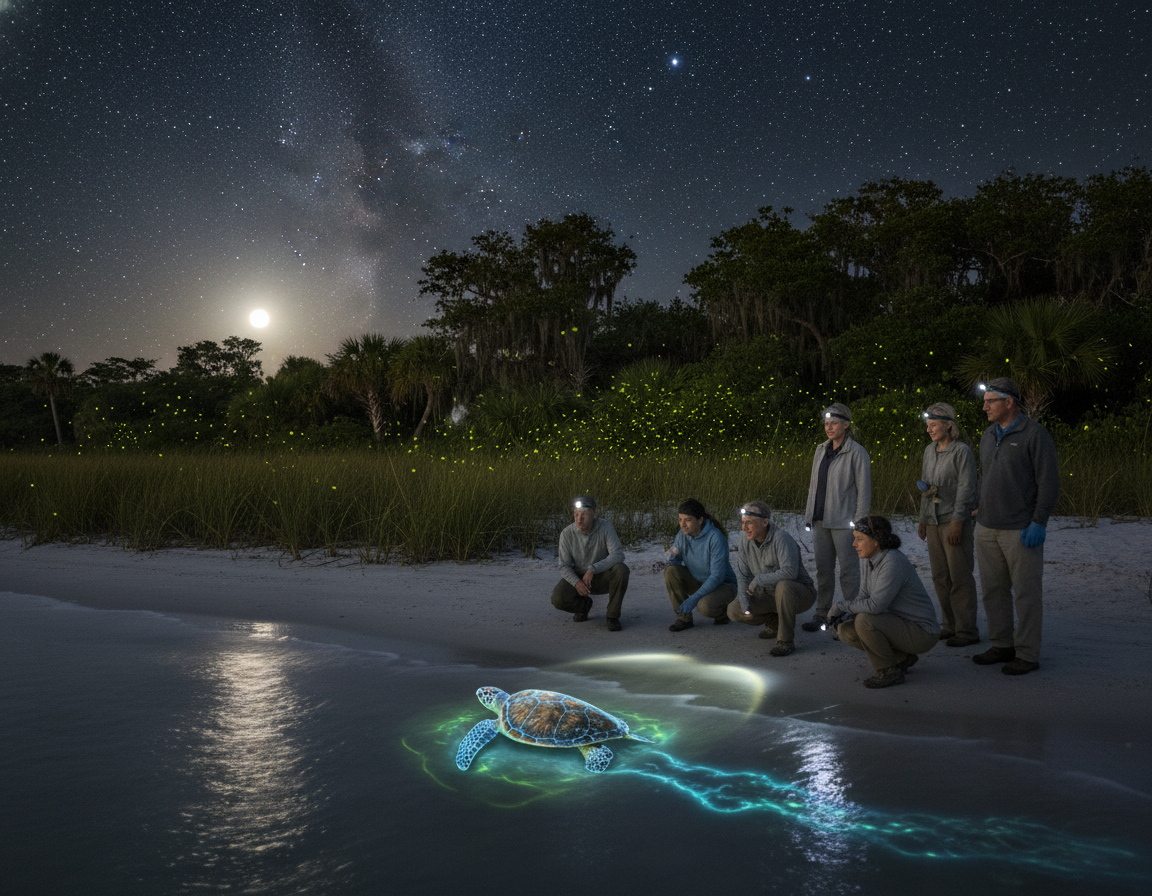
On rare evenings, Hilton Head’s waterways offer one of nature’s most unexpected displays. In certain conditions, bioluminescent organisms light up when disturbed, creating faint glowing trails in the water. Areas like Skull Creek have been known to exhibit this phenomenon, especially during warmer months.
Seeing bioluminescence is never guaranteed, but when it happens, it reinforces how alive the island’s waters truly are. These moments often become the most memorable part of a nighttime excursion, reminding visitors how much remains unseen during the day.
Stargazing on Hilton Head Island
Despite development, Hilton Head still offers pockets of darkness suitable for stargazing. Protected areas like Sea Pines Forest Preserve and Pinckney Island provide relatively low light pollution, allowing constellations, planets, and meteor showers to stand out clearly on cloudless nights.
Moonlight cruises departing from Harbour Town offer another perspective, combining gentle movement across the water with wide-open views of the sky. The reflection of stars on calm water adds a sense of scale that’s difficult to replicate on land.
Local astronomy enthusiasts and informal groups occasionally host viewing sessions, helping visitors identify celestial features and understand seasonal sky patterns unique to the Lowcountry.
Why Darkness Matters to Hilton Head’s Ecosystem
Preserving darkness on Hilton Head isn’t just about aesthetics. Many species rely on natural light cycles for navigation, feeding, and reproduction. Artificial lighting can disrupt these patterns, particularly for sea turtles, migratory birds, and nocturnal insects.
Efforts to reduce light pollution across the island help protect these species while also preserving the quality of nighttime experiences for visitors. Shielded lighting, conservation zoning, and education all play roles in maintaining the balance between human activity and ecological health.
Experiencing the Island With New Perspective
Nighttime nature exploration changes how people relate to Hilton Head. Familiar places feel unfamiliar, quieter, and more intentional. Without crowds or distractions, visitors often develop a stronger sense of connection to the island’s natural systems.
These experiences encourage slower travel, deeper observation, and greater respect for the environments that make Hilton Head unique. They also highlight how conservation and responsible tourism work together to protect what can’t be replaced.
A Side of Hilton Head Few Ever See
Hilton Head’s nocturnal world isn’t advertised loudly, and that’s part of its appeal. It rewards curiosity and attentiveness, offering experiences that feel personal rather than packaged. Whether walking forest trails, drifting across dark water, or standing under a star-filled sky, visitors encounter the island in a way that feels both grounding and unforgettable.
By exploring Hilton Head after dark, travelers gain a fuller understanding of the island’s complexity. Daytime beauty may draw people in, but it’s often the quiet moments at night that leave the deepest impression.